From manual underwriting to digital broker platform: 5× faster quotes and scalable portfolio growth.
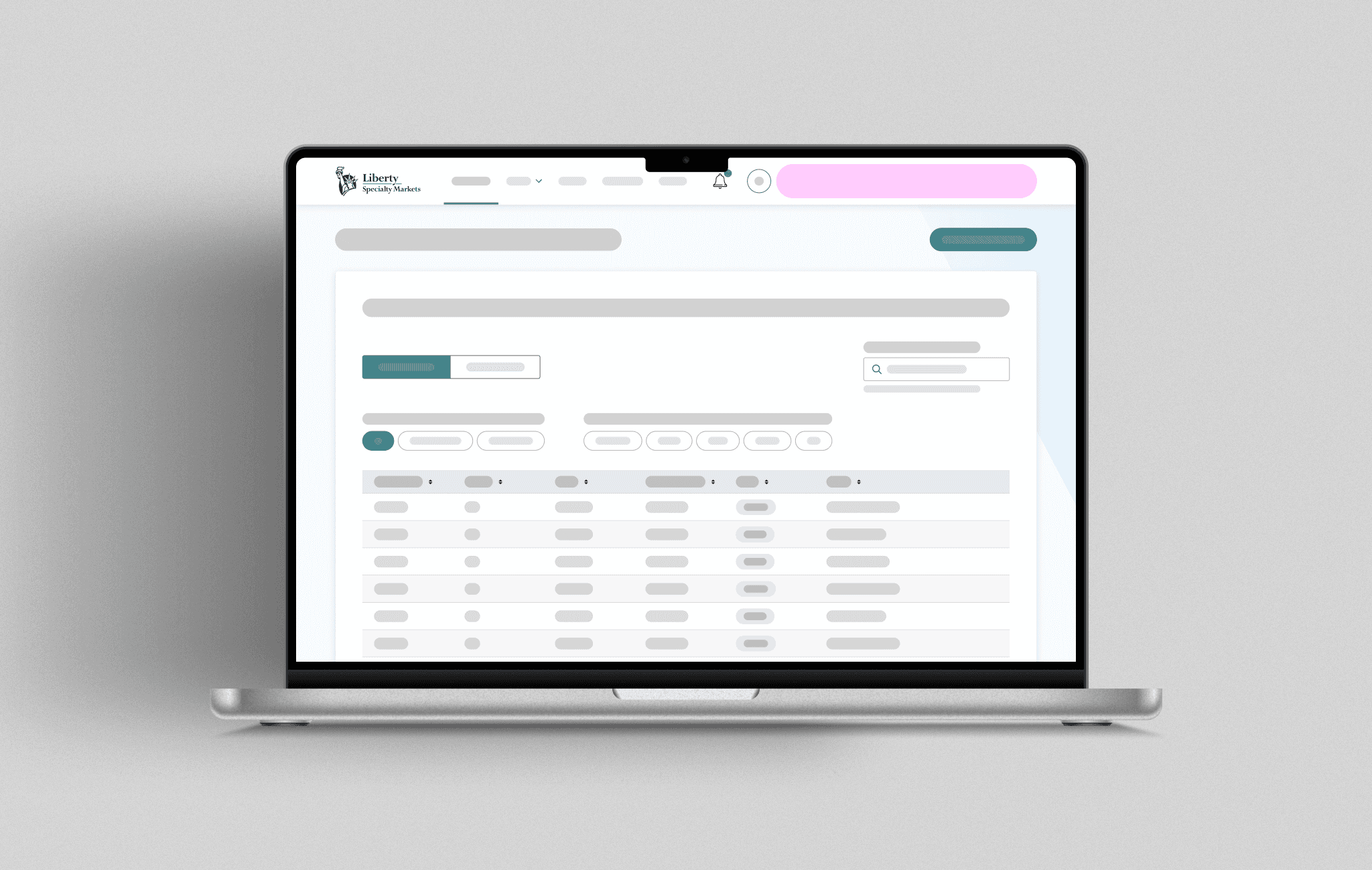
Note: Due to NDA constraints, original deliverables are redacted.
Context
A digital platform transformation initiative to enable fast, scalable, low-touch underwriting for delegated authority business.
Liberty set out to replace fragmented, manual broker workflows with a digital placement platform (Digital Hub)—supporting both portal and API distribution—unlocking growth in portfolio-based insurance.
The work focused on designing the broker journey from submission → quote → bind, balancing usability, compliance, and underwriting control.
Role & Impact
Worked within a 20+ person cross-functional team (Product, Engineering, SMEs), running weekly co-design sessions, sprint rituals, PI planning, and ongoing stakeholder alignment.
Challenge
Brokers struggled to submit and manage risks efficiently:
Disconnected tools with poor data visibility
Repetitive manual entry and data errors
Limited flexibility when adjusting quotes
This created real consequences:
Slow quote turnaround and delays
High effort and frustration for brokers
Missed deadlines and lost revenue opportunities
Solution
Delivered a digital broker platform (Digital Hub) that enabled fast, self-serve quote generation supporting broker renewals.
Approach
Design Iteration

User feedback on tested UI states
Most raw problems point at problems with the flow and policies. Design Opportunities have been shared with the product team and influenced the way forward. I guided the research strategy by aligning stakeholders on "Ryanair scenario", synthesising usability insights, and surfacing friction points.
Key insights directly informed interface refinements, such as the usefulness of the summary tab and the value of email quotes, helping the team prioritise clarity, reduce cognitive load, and iterate towards a more intuitive quoting flow.
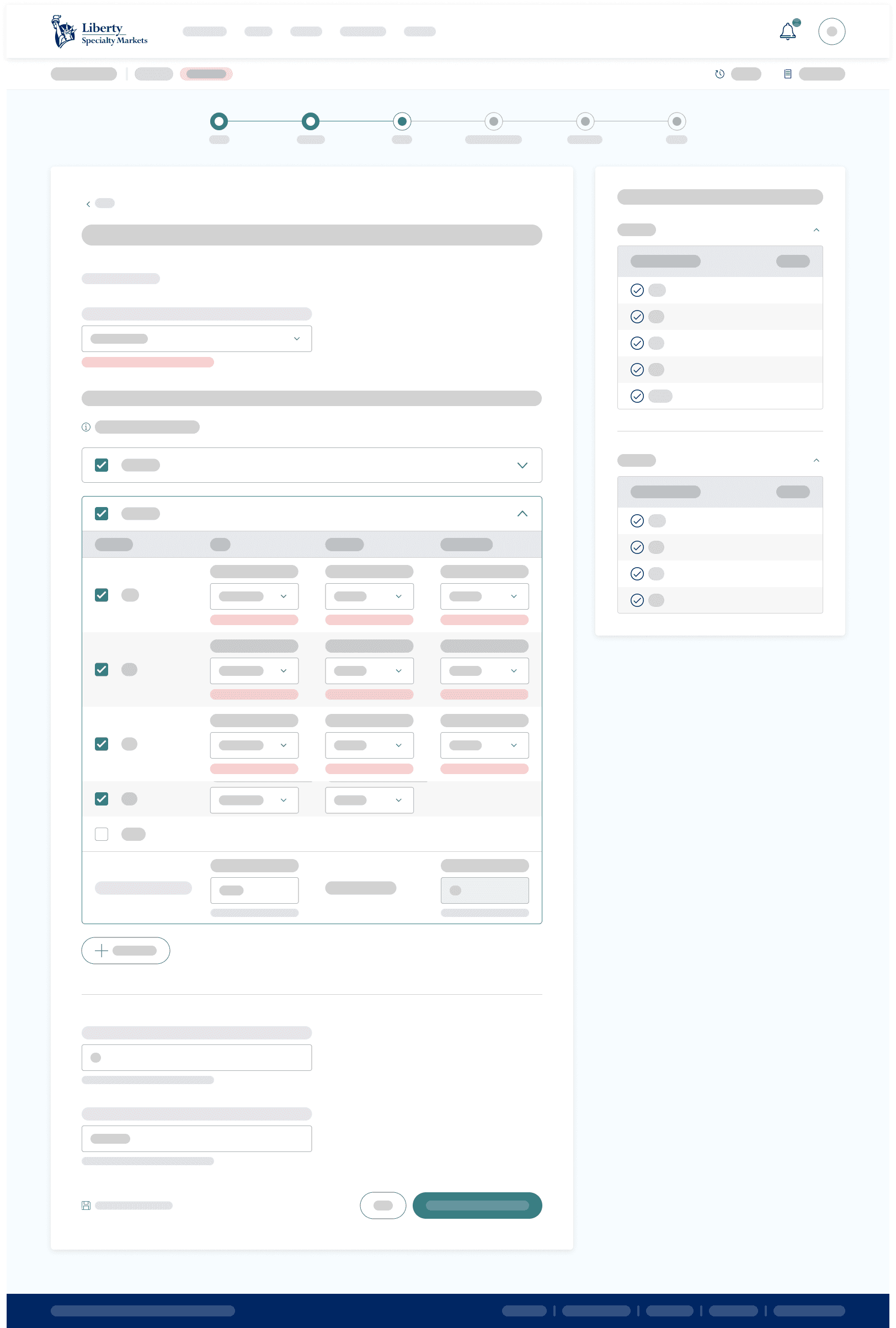
Indicative quote stage
Main Pain Points
Pain
Quote layouts made evaluation harder than it should be
Expanding and collapsing views made it difficult to scan, compare, and understand options side by side.
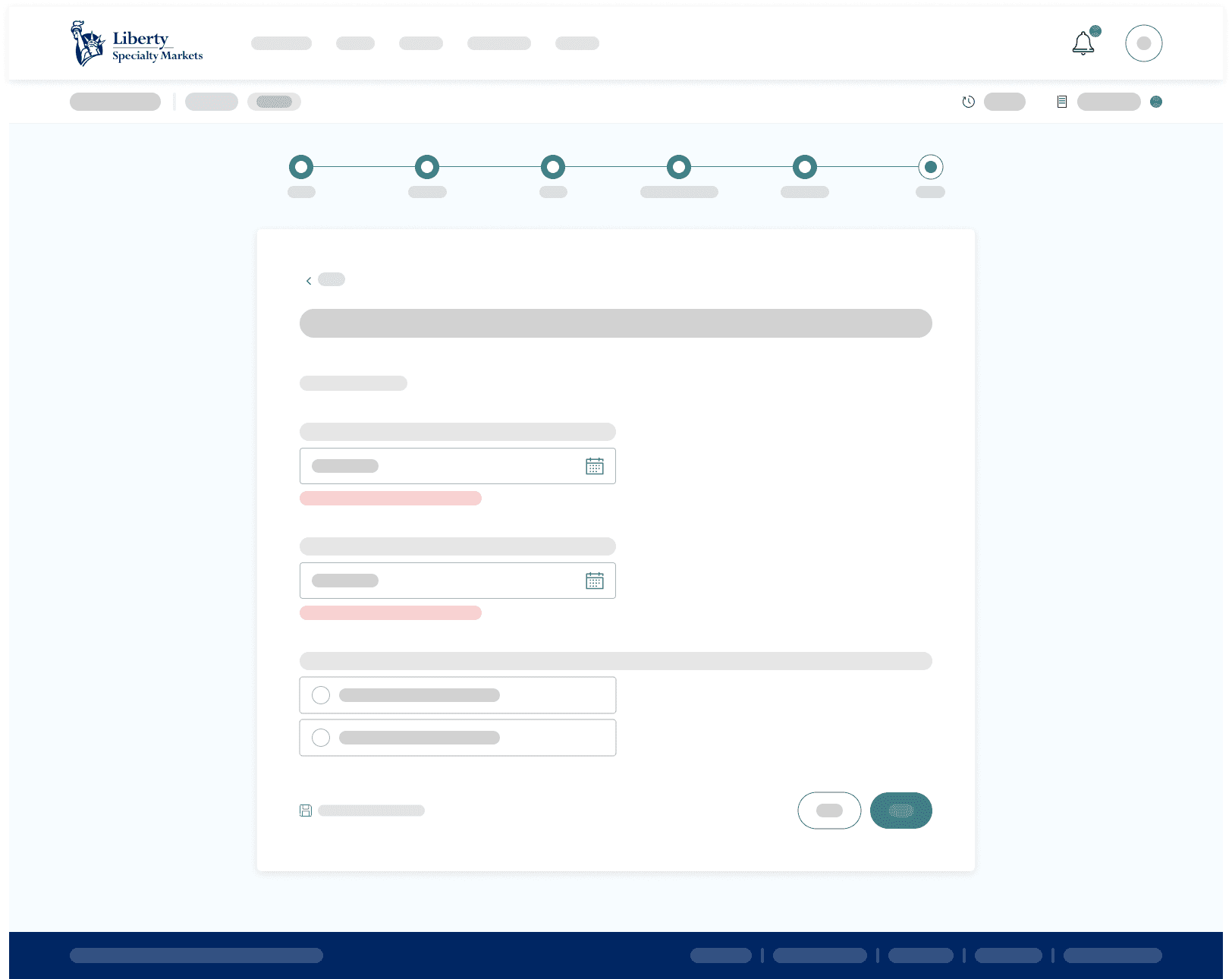
Bind selection stage
I uncovered broker demand for flexible policy terms; guided the team to clarify expiry logic and balance user needs with underwriting constraints.
Main Pain Points
Pain
Limited flexibility for policy durations
Brokers needed more control over policy timeframes (e.g. non-standard durations like 6–18 months) to meet client needs.
Design Principles in Action
Based on these pain points, I defined four design principles:
Comparability: support confident decision-making across options
• Introduced side-by-side quote comparison (tabular matrix)
• Improved layout to make options easier to scan, expand, and evaluate
→ Addresses: Difficult to compare quote options + Quote layouts made evaluation harder
Transparency: make pricing clear and predictable
• Clarified how indicative quotes relate to final pricing
• Set clearer expectations where pricing may change (“Ryanair scenario”)
→ Addresses: Lack of pricing transparency created mistrust
Efficiency: remove unnecessary steps for experienced users
• Enabled users to skip indicative quote stages and move directly to full quote or referral
• Streamlined the journey for faster decision-making
→ Addresses: Unnecessary steps slowed down experienced users
Flexibility: allow brokers to tailor quotes to client needs
• Supported custom and non-standard policy durations (e.g. 6–18 months)
• Enabled greater control over quote configuration
→ Addresses: Limited flexibility for policy durations
Outcomes
Faster decisions through early pricing clarity
Surfaced pricing earlier and set clearer expectations, reducing wasted effort on unviable submissions.
Reduced manual effort and friction in journey
Streamlined key steps and reduced repetitive input, enabling faster progression from submission to quote.
Increased flexibility to meet real client needs
Enabled brokers to tailor quotes through adjustable durations and configurations, supporting more real-world scenarios.
Simplified complex quoting into comparable options
Structured quote outputs into clear, side-by-side options, making it easier for brokers to evaluate and tailor coverage.
Reflections
Learnings
Validate continuously, even under pressure
Embedding research into delivery helped challenge assumptions early and ensured decisions reflected real broker needs.
Define MVP scope through outcomes, not features
Focusing on high-impact workflows (submission → quote) enabled faster delivery and clearer prioritisation across teams.
Alignment is as important as design
Facilitating workshops and reframing discussions around user needs helped navigate ambiguity and align stakeholders.
Build trust to unlock access and impact
Gaining stakeholder trust enabled direct user access, improving research quality and strengthening design decisions.
Trade-offs & Constraints
Worked within tight timelines aligned to renewal deadlines
Balanced speed and rigour by integrating lightweight research into ongoing design, ensuring continuous validation without slowing delivery.
Navigated stakeholder misalignment and internal politics
Business, product, and SMEs often had conflicting views and unclear requirements. I facilitated alignment through workshops, reframing discussions around user needs and outcomes.
Designed in a complex, evolving system environment
Research, requirements, and design evolved in parallel, often with incomplete flows. I managed ambiguity by iterating quickly and validating assumptions continuously.